Even people who have never seen any of Ghost in the Shell (GitS) have at least heard of it in some form. Whether it be the original film, the manga, or the TV show, people know that this cyber-punk futuristic anime has enthralled fans from the get go. Now, ten years after the end of its hit TV shows, four new OVAs have been released for our viewing pleasure. The only question is: can this collection of films meet up to the standards set by its predecessors?
Let’s take a look at Ghost in the Shell Arise Borders 1 and 2.
A review copy was provided by FUNimation Entertainment.

Ghost in the Shell Arise is a prequel to the rest of the franchise, taking place a year after the fourth World War and before the cybercrime team we know and love was together investigating cases. We learn a bit about everyone’s backstories, which provides a great insight into future character development and understanding more about the world. We even get to see members on the opposite side of the law, which makes for an interesting dynamic, and even get introduced to some new characters.
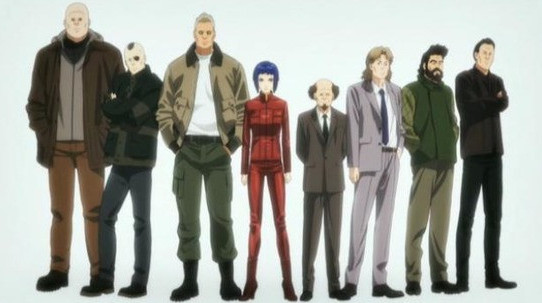
Though, it just kind of looks like a copy-paste from SAC
The opening theme is not at all what fans have come to expect from the series. It’s mellow and low, almost something you’d here in a futuristic spa or, hell, an elevator rather than getting you pumped up to watch a high-action show about robots and criminals. There are two different ending themes so we’ll have to look at them separately. For Border 1, it’s Jibun ga Inai by salyu x salyu, and while being similar in tone to the opening, the additional voices and more autotune sound actually make it quite transfixing. Border 2’s ending theme, Soto wa Senjō da yo by Ichiko Aoba and Cornelius, the song has a soft melody sung over a slow beat that is completely out of sync.
Border 1, Ghost Pain, introduces us to the Major, Motoko Kusanagi, before she had the body we’re used to seeing her in. We also get to see the rest of the crew before they joined forces. They join forces to find the cyber brain of a murdered colonel in order to prove his innocence, while Kusanagi tries to gain her autonomy as a full-bodied cyborg and battling to understand the truth. She begins to have hallucinations and phantom pains, however, as more and more parties try to obtain the brain for themselves.
Border 2, Ghost Tears, Kusanagi begins to form her own team after a tachikoma/logikoma has been hacked and tampered with while a war crimes trial goes on. The security system is hacked and soon begins going on the fritz, halting all modes of travel and sparking a group of terrorists trying to grind the city to a halt. This one has a bit of a fast pace, so if you’re not paying attention, you’re likely to lose the plot but it makes for an enthralling drama. It’s not as good as the first episode, but still strong.
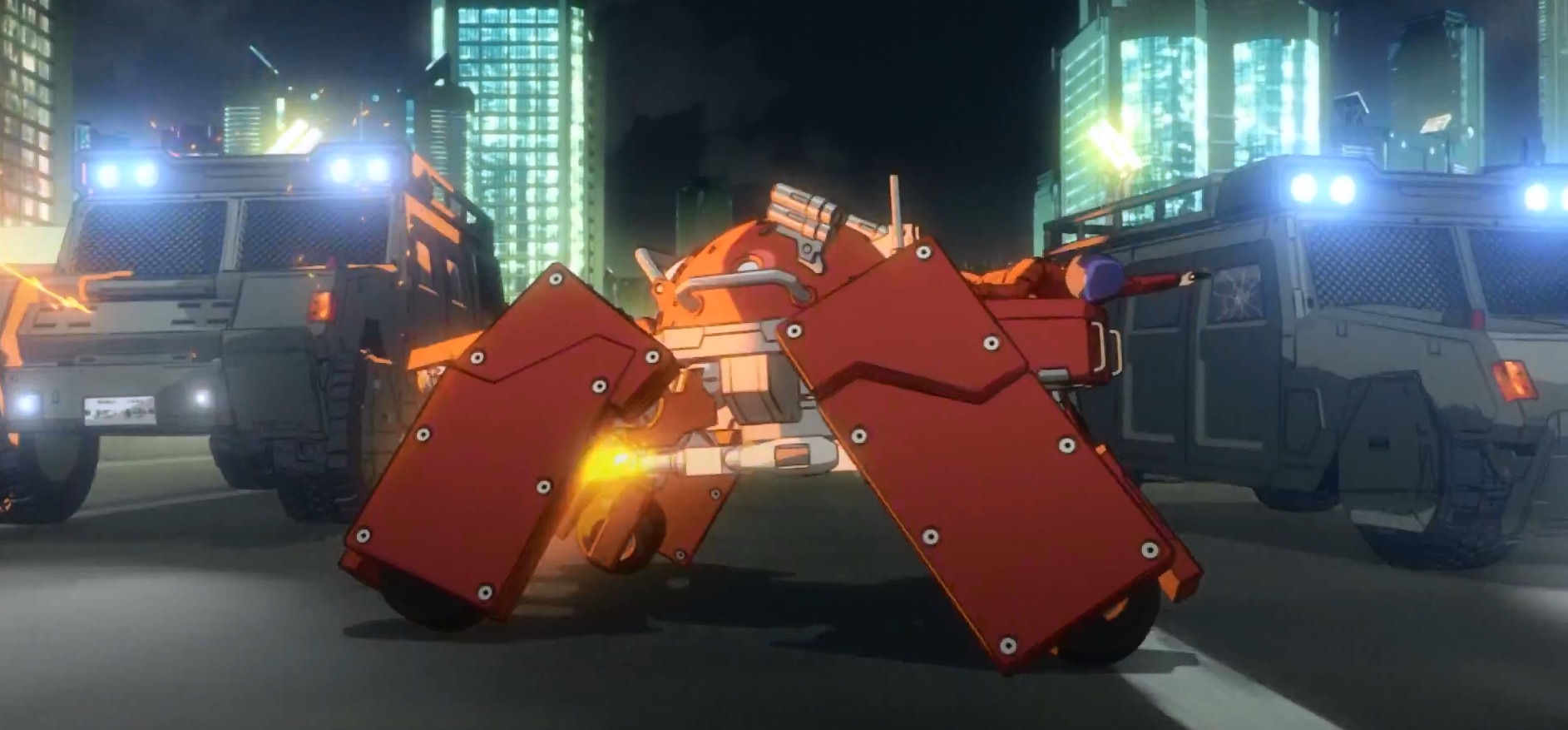
At least we get some highway battles on robots!…AGAIN! THRILLING!
Some things haven’t changed, like the tachikomas sounding like young girls, most of the cast doesn’t look much younger than their show counterparts, and the action is still as intense and well choreographed as always. Occasionally, GitS plots were too difficult for me to follow, but both stories were clear cut and easy to understand, though not without its nuisances. The visuals have remained the same as well, but I think it is a missed opportunity to try something new with the backgrounds of the series.
I have to say I am not a fan of the animation in these movies. Makoto’s new design is too simple and too smooth. There is no complexity to the design and, honestly, the hair is not really doing it for me. I will give the animators credit that they did still manage to get her expressions done just right. I’m not sure if the younger look works for this character’s style but it is a good visual reminder that this is not the Major we know and love just yet. The same problem extends of the series — everything is way too flat, and so textureless and occasionally the CGI would look abysmal. Some of the visual representations of hacking and the tech world are incredibly well done though.
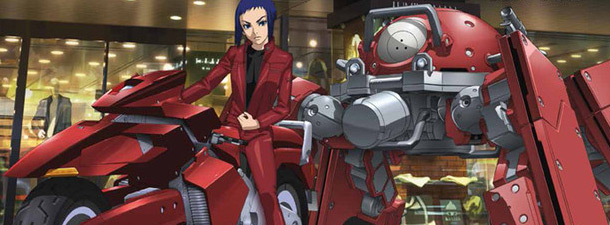
It’s just too “rebellious cyberpunk teenager” and in way too much red.
If at all possible, watch this on Blu-Ray. The animation, even if it’s not my favorite style, looks far better in high definition. Worst of all, the original voice actress for the English, Mary Elizabeth McGlynn, voices another character in the films named Kurtz, which only makes Elizabeth Maxwell sound all the more jarring and flat. Maaya Sakamoto is actually my preference for the Major for these movies, but I actually quite enjoy the dub overall. Perhaps its because I’m using to watching GitS in English or just because the characters are sound better as an ensemble in English, but it sounds more natural to me.
Some of the DVD extras include trailers, some cute tachikoma shorts (which are called logikomas), new flashes which are just teasers, some textless open and closing videos, interviews with the cast and crew, and a look into the Unit 501 R&D department. These extras are definitely worth it if you’re a big GitS fan, I know I certainly enjoyed them.
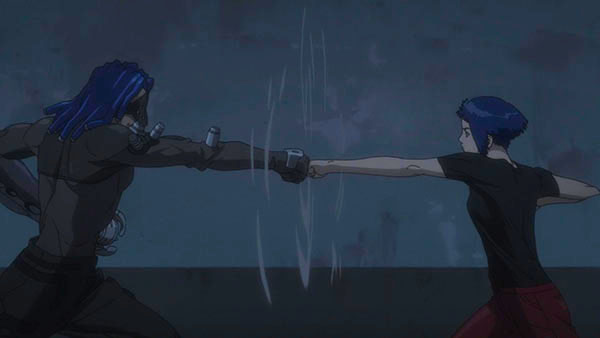
Did I mention that we at least get to see the Major kick ass again? Big plus.
Overall, the first two episodes of Ghost in the Shell: Arise are able to remind us why we fell in love with the original series, but it doesn’t do much to add to it. There’s some interesting scenarios and backstories thrown in but none that shake the franchise up. So, if you’ve been wishing for more of the same wonderful show, then you’re in luck. If you’ve been waiting for the franchise to try something new and innovative, you might have to wait another decade.
Pros:
- Good story.
- Good dub/sub.
- Excellent visuals.
- Good extras.
Cons:
- The Major sounds off in English.
- Some music is substandard.
- The animation is textureless and plain.
Rating: 4/5


Starshine5050
Latest posts by Starshine5050 (see all)
- Review: Doctor Strange - November 11, 2016
- Is American Horror Story: Hotel Really That Bad? - October 28, 2016
- Is Practical Magic Really That Bad? - October 21, 2016
- Is Hocus Pocus Really That Good? - October 14, 2016
- Review: Sully - September 23, 2016




Pingback: Ghost in the Shell Arise Border 3 and 4 Review | Moar Powah!